+250% Engagement
+150% ARR (factor)
+200% Session length
Introduction
Nansen is a VC backed Crypto Analytics startup aimed at giving people an edge in crypto investing. Nansen Research was a peripheral product that showcased the main products data and provided expert analysis on the market.
The Problem
The market was undergoing a downtrend and user retention was dropping. Looking at the analytics we could see that Nansen Research lacked 'stickiness' and we considered how we could position the product differently to better showcase Nansen's benefits and help improve conversion.
The Team
I worked in a typical agile squad with a Product Owner, a Frontend Developer and a Backend Developer.
Nansen Research is home to long form content
Starting assumptions
In the kickoff meeting we established several assumptions we wanted to test with user research:
The site layout is too confusing
Users are struggling to find content
Users would read more articles with more intuitive layout
Research approach
To gain insights and test these assumptions I utilised a mixed of research methods to provide both quantitive and qualitative data:
User surveys
User interviews
Card sorting exercises
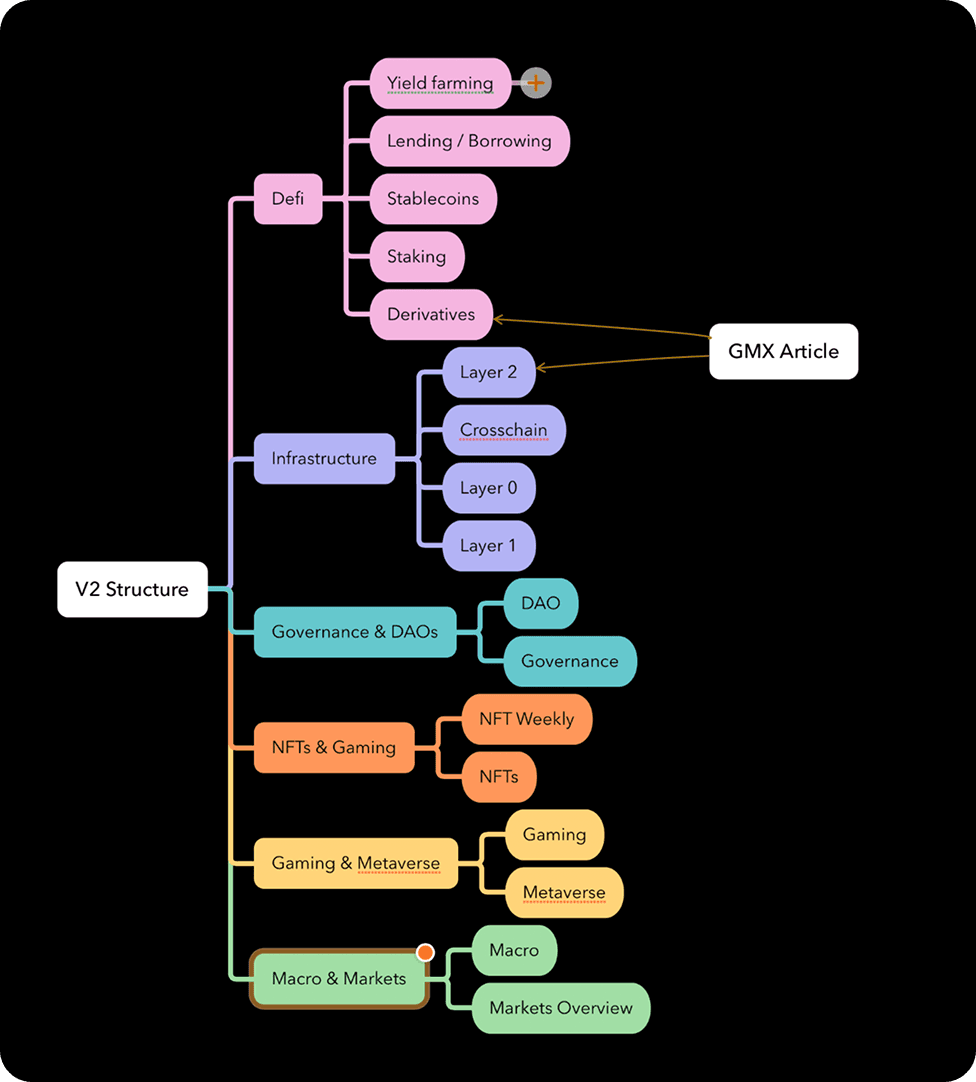
Content structure mapping
Results
The research showed clear pain points and opportunities to differentiate the product:
73% of users struggled to find content related to their topics of interest
84% of users reported information overload from the sector in general
54% of users would like visual previews of articles to understand the contents
Design approach
The research showed clear pain points and opportunities to differentiate the product:
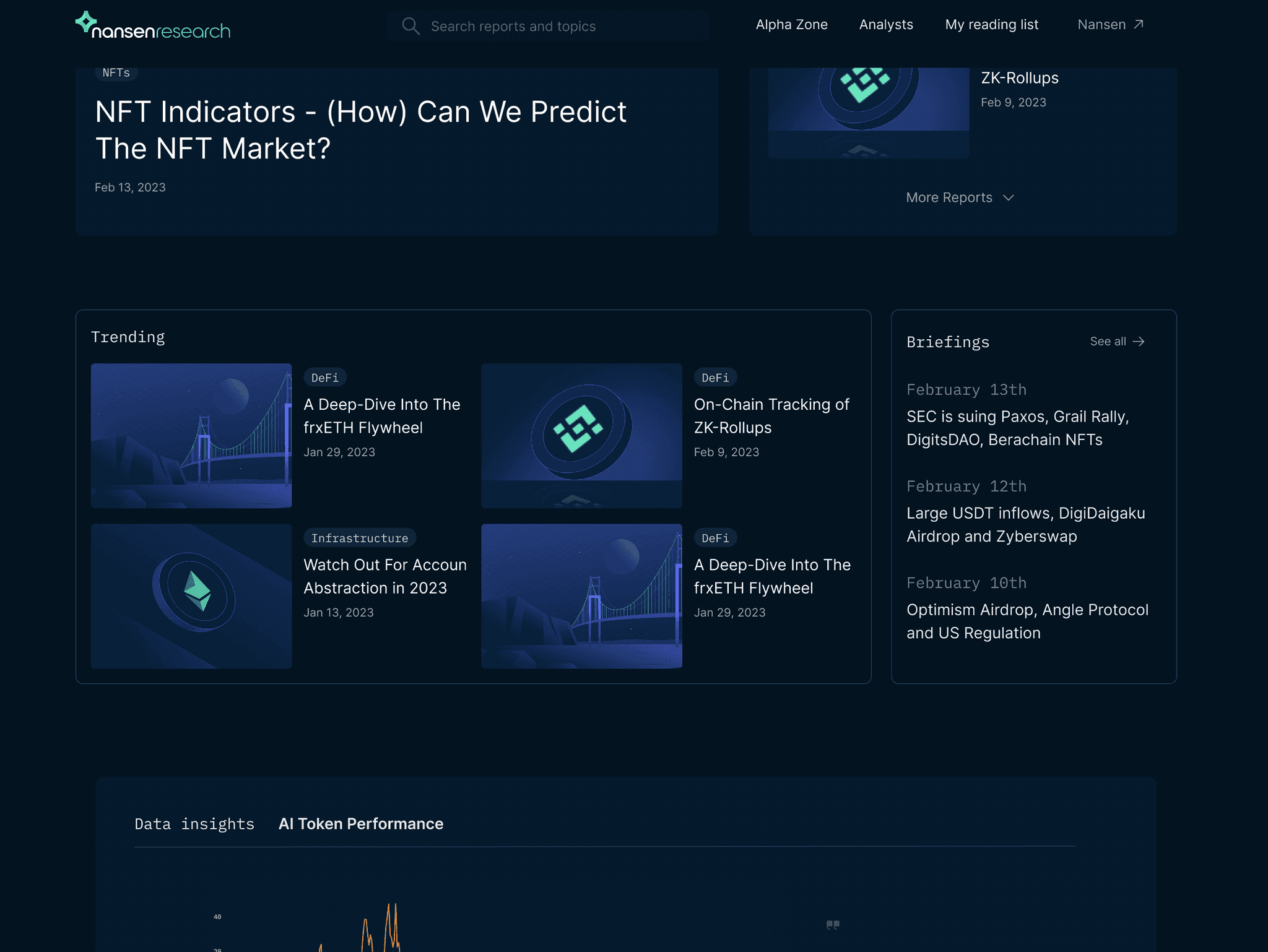
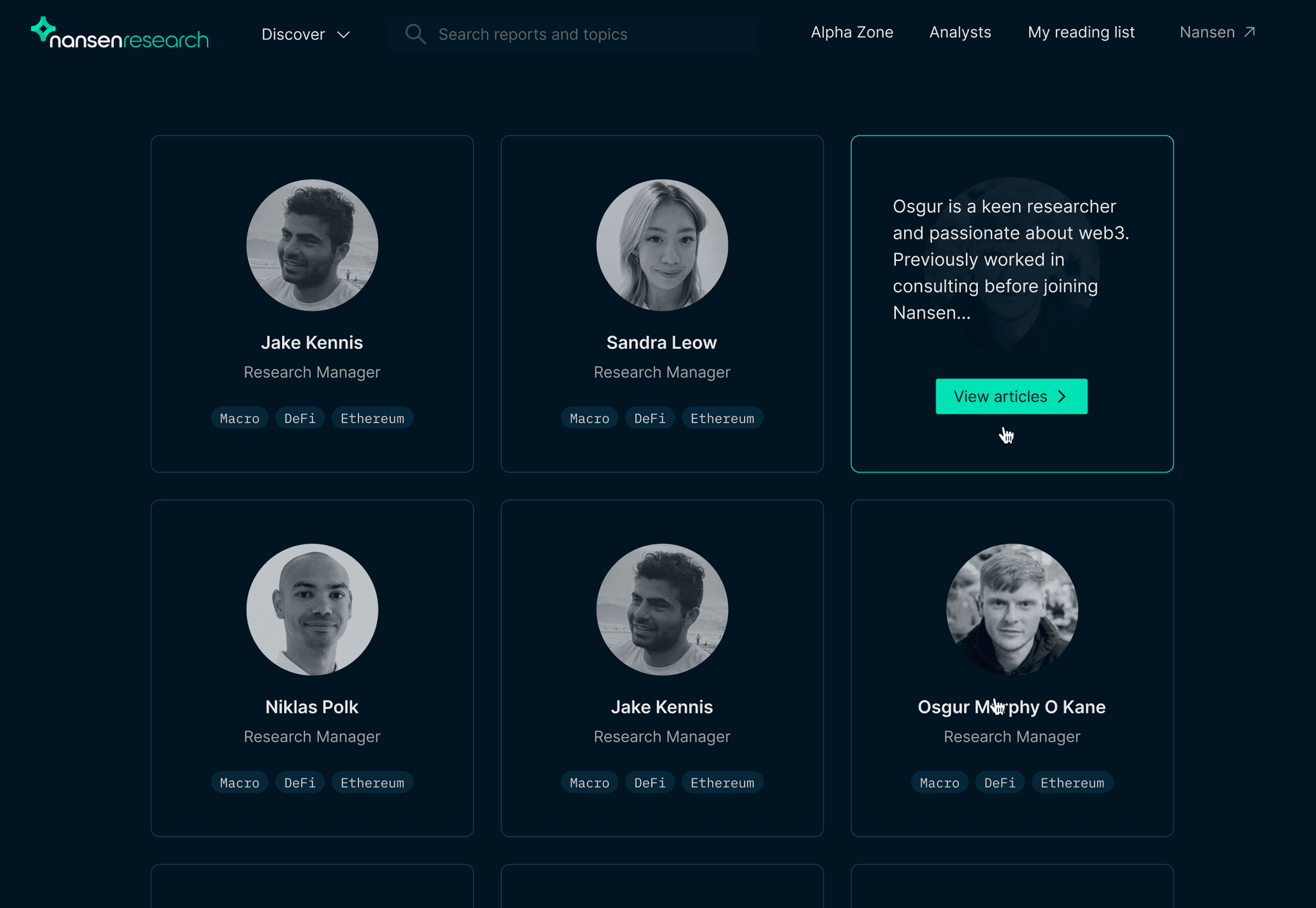
Simplify navigation - by removing excessive options and improving visual harmony
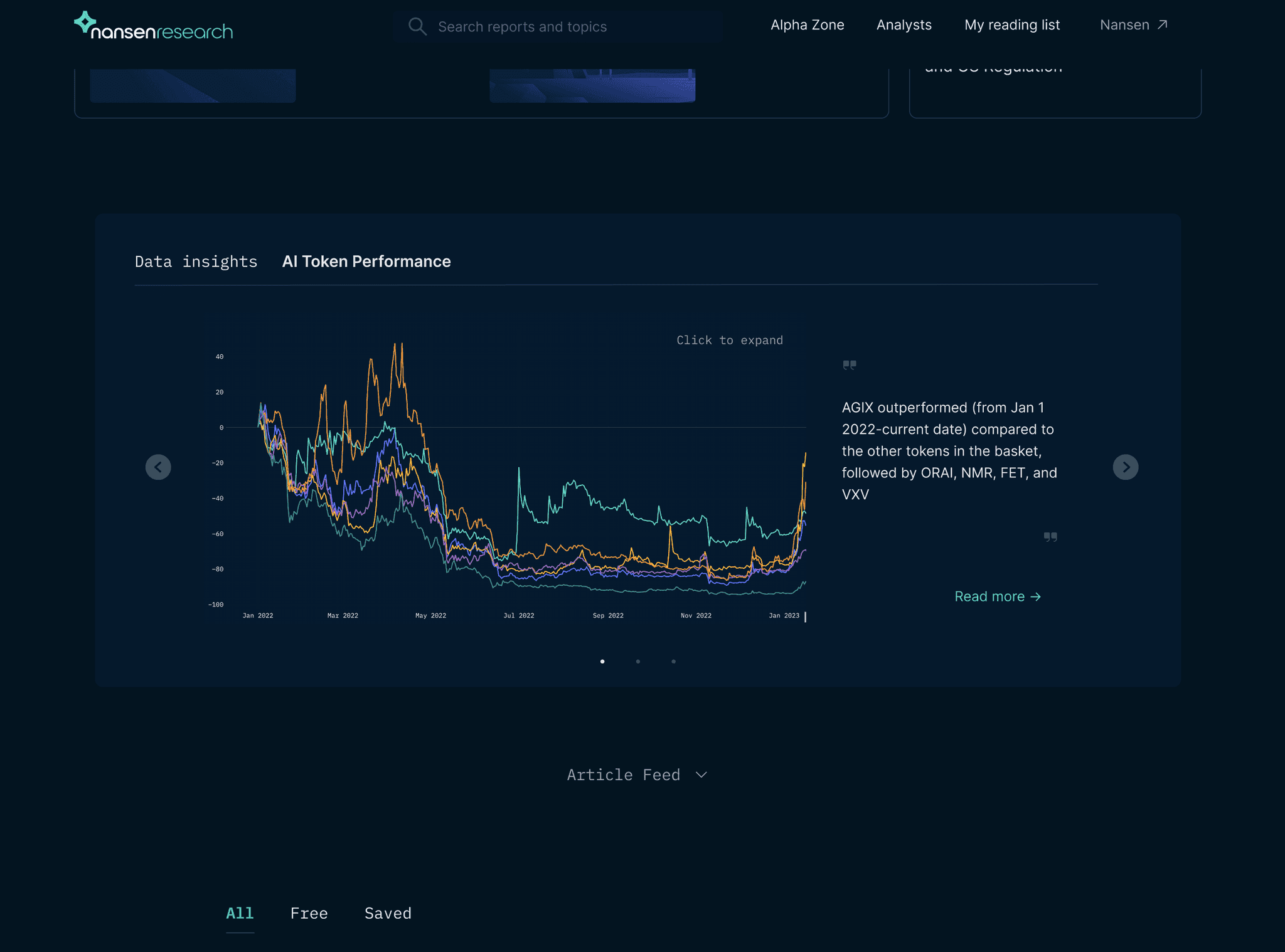
Craft an engaging journey - this started on the homepage as shown below
Adding visual impact - from showcasing charts and data to delightful animations
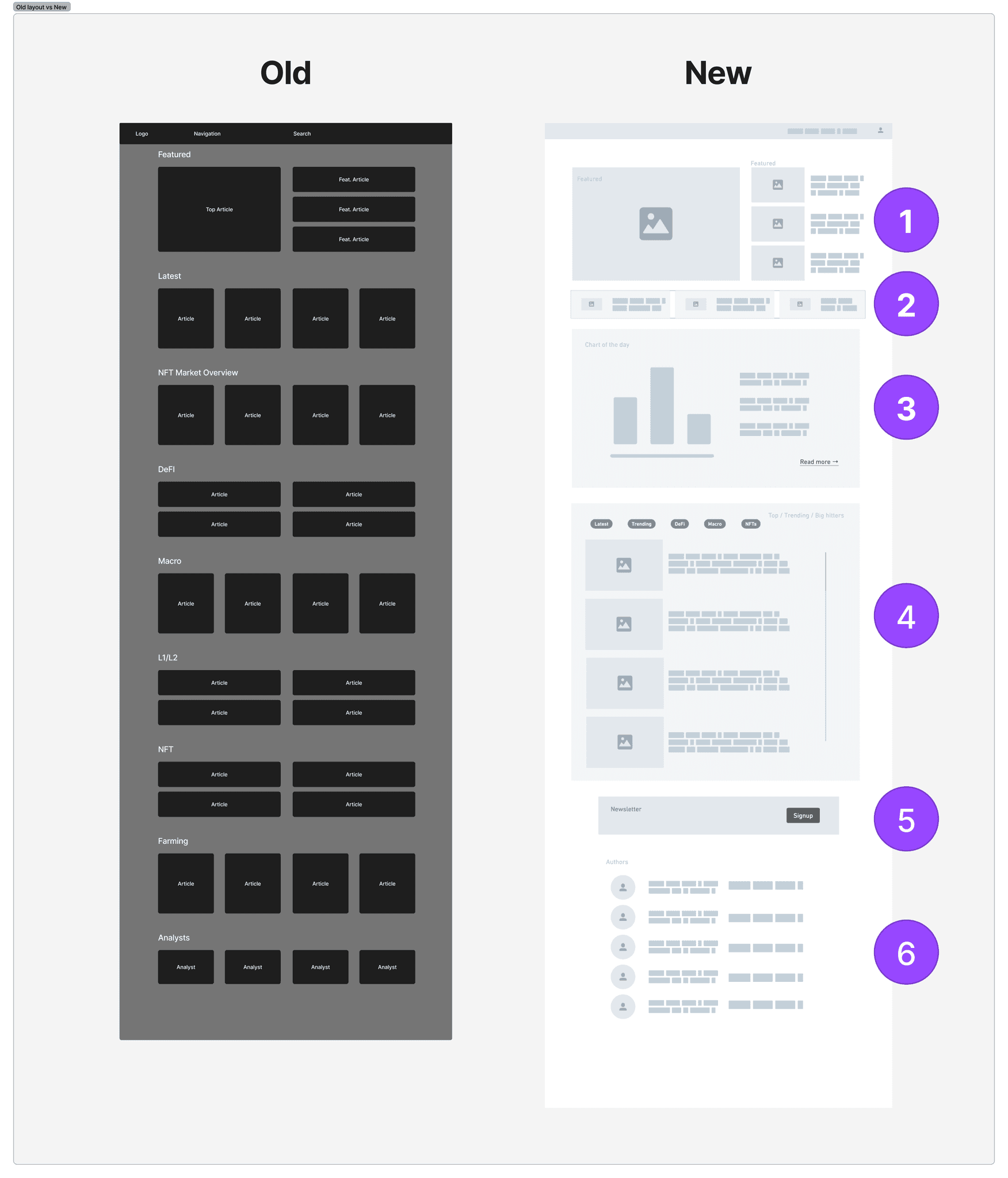
Strategising the homepage
Three new features were added to aid the new user journey and product offerings:
Chart of the Day
Article Bookmarking
Expanded Search
Final Designs
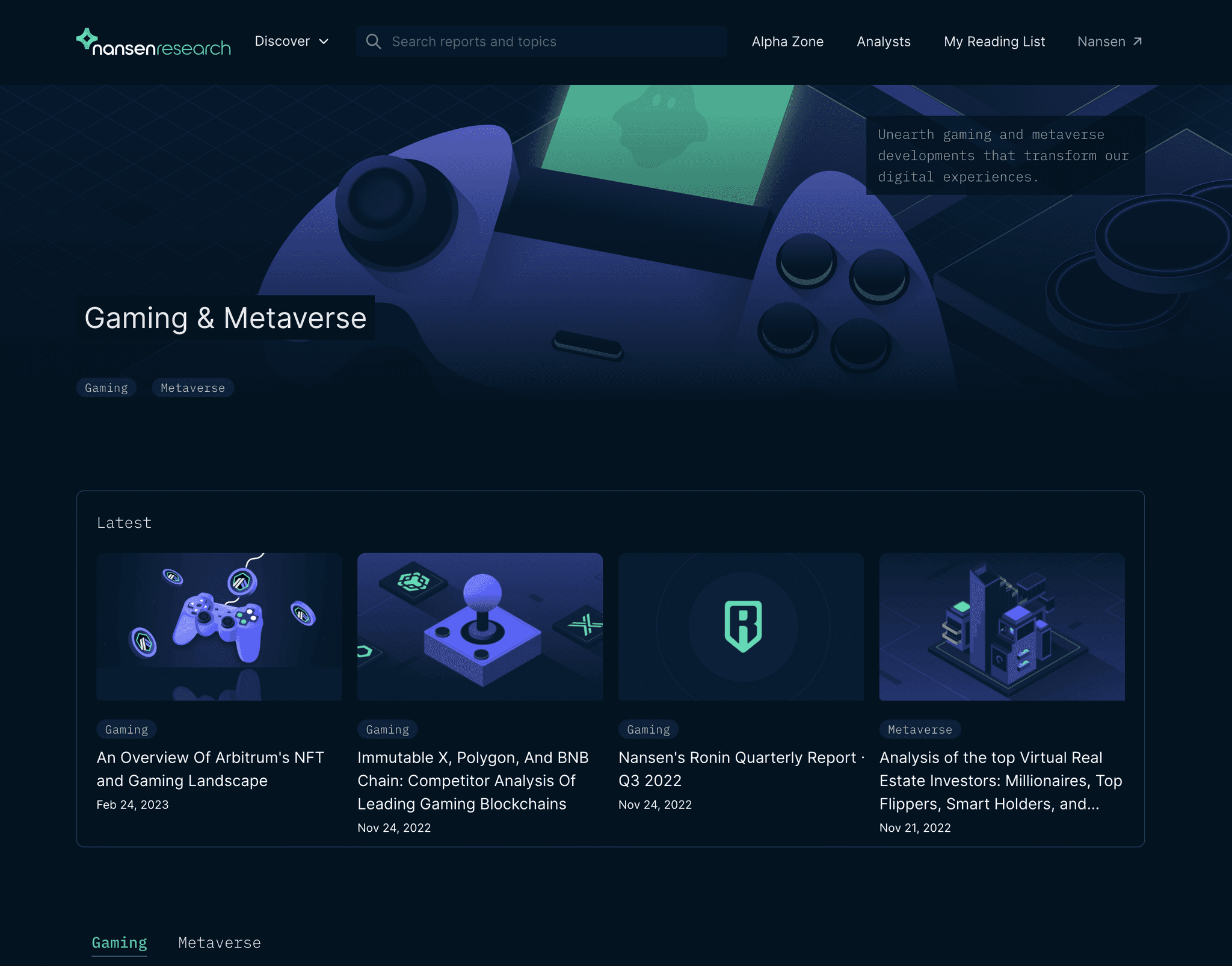
Impact
The redesign was a big success on a several levels for the product and company processes:
Product strategy - the increased engagement and new features led to increased conversion and therefore the product into a more strategic position.
Pivoting to user led design - as the first major redesign for the product with a user focused design process it enabled a shift in culture towards a more product led focus.
'Design performance' metrics - the reordering of navigation and new feature placement allowed a shift from following design precedence to a data driven culture in the design chapter.
+250% Engagement
+150% ARR (factor)
+200% Session length